

Programme


Datacenter Changemakers Sweden
Episode 1
Back in Stockholm is Datacenter Changemakers Sweden, our live talk shows with the people who are changing the face of the data center industry. The most pressing issues facing the digital infrastructure sector will be discussed.

Hosted & moderated by
Liselotte Lyngsø
Founder of Future Navigator
In this episode:
Data Centers: Energy Consumers or Energy Partners?
As demand for digital infrastructure grows, the conversation is no longer just about how much energy data centers consume, but how they can contribute to a more resilient, efficient, and circular energy system. Heat reuse is a key part, creating opportunities to turn surplus heat from data centers into a valuable resource for district heating, businesses, and local communities. This panel will explore how all players can work together to balance growth, energy availability, grid capacity, sustainability, and local value creation.
Guests include:
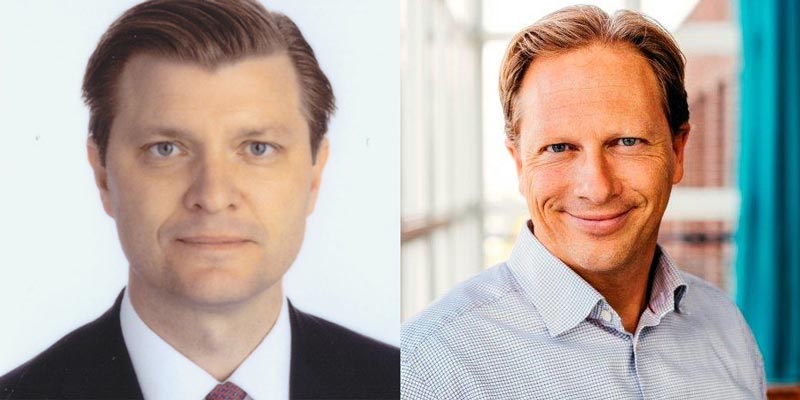
Carl Höeg – CEO and Founder, Deepgrid
Mats Tullgren – Director Regional Grid Businesses, E.ON Energidistribution

Empowering the Future of AI Data Centers from Grid to Chip
AI is not just increasing power demand; it is reshaping how data centres are designed.
Higher rack densities, new cooling paradigms, and tighter energy constraints require infrastructure to be viewed as a single connected system rather than as separate components.
In this session, Delta Electronics explores the “Grid to Chip” perspective, examining how power distribution, energy storage, UPS technology, and cooling must align from the utility entry point down to the processor level to support scalable, efficient and future-ready data center environments.

Infrastructure Transformation: Building AI-Ready Data Centers
This session explores the infrastructure transformation required to build AI-ready data centers. Attendees will learn how AI is driving increases in fiber-optic density, which calls for new approaches to network architecture, cabling, and connectivity. The presentation covers the latest GPU technologies, the role of advanced protocols such as RDMA over Converged Ethernet (RoCE) and InfiniBand, as well as the shift toward high-density, scalable optical networks for expansion in depth, width, height, and across the data center. Practical challenges, such as cabling complexity, durability, and the need for structured solutions, will be addressed using real-world examples.

Innovative Liquid Cooling, Heat Recovery & Lifecycle Performance for Responsible Data Center Growth.
The data center industry is experiencing rapid growth, creating new opportunities as well as new responsibilities. As power demands and cooling requirements increase, Alfa Laval is helping operators build a more sustainable path forward through innovative liquid cooling, heat recovery and lifecycle performance solutions. Discover how responsible growth and operational excellence can go hand in hand.


Built on Modular DNA, Designed for Future Scale: Leadership Datacenter’s HyperFrame™ & ePOD Approach
Built on Modular DNA, Designed for Future Scale showcases Leadership Datacenter's vision for next-generation digital infrastructure. The presentation introduces the HyperFrame™ and ePOD concepts, demonstrating how standardized, prefabricated modules enable rapid deployment, flexible expansion, and long-term scalability. It explains how a modular approach reduces project complexity while creating resilient, AI-ready data center platforms that can adapt to future demands.” Presented by Holger Zultner (Managing Director) and Mathias Köster (Lead of POD Solutions).

Datacenter Changemakers Sweden
Episode 2
In Datacenter Changemakers Sweden, our live talk shows with the people who are changing the face of the data center industry, the most pressing issues facing the digital infrastructure sector will be discussed.
In this episode:
Sustainability by Design: Meeting the Next Wave of ESG Demands
Can Sweden and the Nordics preserve their “green data center” reputation while scaling for the AI era? How will evolving EU sustainability and reporting frameworks influence investment, transparency, and operational priorities? And what role can data centers play in shaping a more resilient, secure, and integrated energy system for the future?
Guests include:
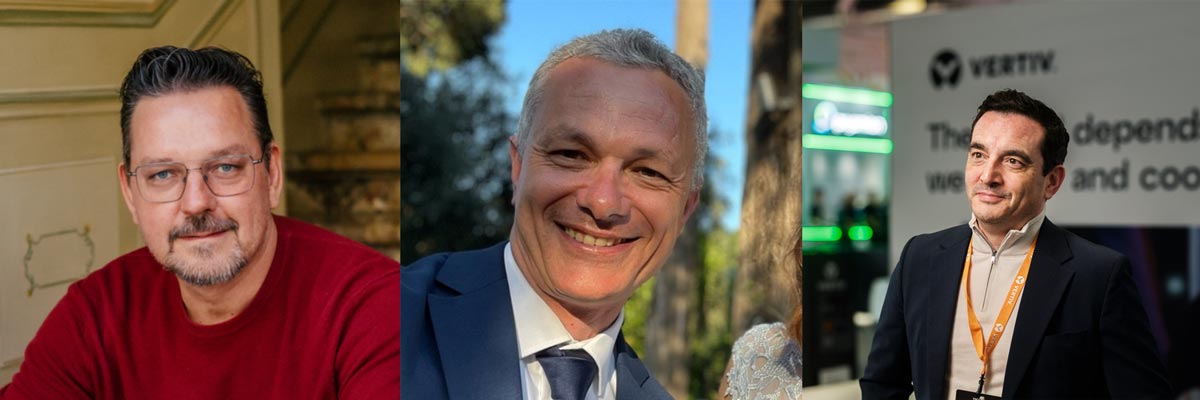
Richard May – Country Manager, UKI & Nordics, Sunbird Software


Nordic Data Centers in a Global Context: Trends, Challenges, and Comparisons
The Nordic data center industry is evolving rapidly, shaped by sustainability initiatives, AI-driven demands, and workforce shortages. This session presents key findings from the latest industry survey, comparing trends in the Nordics with other global markets. We will explore how the region stands out in areas like energy efficiency and regulation, while also addressing challenges shared with the rest of the world.
Join us for a data-driven discussion on the future of data centers in the Nordics and beyond.




Energy Intelligence: Powering the AI Era
AI is fundamentally reshaping infrastructure requirements. The scale, density, and pace of AI innovation demand a new infrastructure paradigm. Organizations must rethink how they deliver power, cooling, and operational intelligence to support increasingly complex AI workloads while maintaining resilience and efficiency. Speed to deployment is becoming a competitive advantage. Standardized, prefabricated, and software-defined infrastructure models enable organizations to accelerate time-to-capacity, reduce deployment complexity, and scale AI environments with greater consistency and predictability. Power and cooling are now strategic enablers of AI performance. Next-generation technologies such as Schneider Electric's 800VDC architecture, integrated liquid cooling, digital twins, and simulation capabilities help organizations optimize performance, improve energy efficiency, mitigate deployment risk, and prepare for the future of AI infrastructure.


Air Cooling in the Age of AI: Limits, Options, Reality and Outlook
AI workloads are driving higher power densities and fundamentally changing the requirements for air cooling in data centers. Operators and designers are increasingly facing uncertainty: Is air cooling still sufficient? How much airflow is realistically achievable? And how do rising loads and changing operating profiles affect cooling concepts in both greenfield and brownfield projects? This uncertainty is clearly reflected in daily project work through a growing number of design iterations, system comparisons, and operating point evaluations.
This presentation explains how AI is actually impacting air cooling in data centers, where the real technical and building-related limits are, and which room-based air cooling concepts are viable today. It also places liquid cooling in context, showing why air cooling remains essential for handling residual heat, infrastructure layout, and space utilization. Based on a real project example, the session demonstrates how cooling concepts can be selected in a structured and practical way, taking into account building constraints, available space, CAPEX, OPEX, and carbon footprint. It shows why air cooling remains a core element of modern data center design, even in the age of AI.


How Do We Accelerate Decarbonization?
This updated presentation, reflecting a lot of new tests, is our response to the Net Zero Data Centers RFI, which is focused on identifying innovative, sustainable, and scalable backup power solutions to support the future of digital infrastructure.

The Nordics and Sweden in the global AI buildout: capacity, power and the constraint that decides it


Datacenter Changemakers Sweden
Episode 3
In Datacenter Changemakers Sweden, our live talk shows with the people who are changing the face of the data center industry, the most pressing issues facing the digital infrastructure sector will be discussed.
In this episode:
Thru’ these architects eyes
Big. Ugly. Boxes. That’s probably what most people see when they think of data centers – and most of the time they are not wrong. Form follows finance... Cost and speed to market might be to blame, but why is appealing architecture so low on the agenda? Can buildings that are a sight for sore eyes not help increase the acceptance of data centers?
Guests include:
Carl Fredrik Svenstedt – Architect, Carl Fredrik Svenstedt Architects; Associate Professor, Ecole National Superieure d'Architecture de Versailles
Have a look at all presentations and talk shows of last year's Datacenter Forum Stockholm!
~ The programme may be subject to change ~
Sponsors & Partners
Platinum sponsor

Gold sponsor


Silver sponsor


Bronze sponsor


Associate sponsor


Partner


